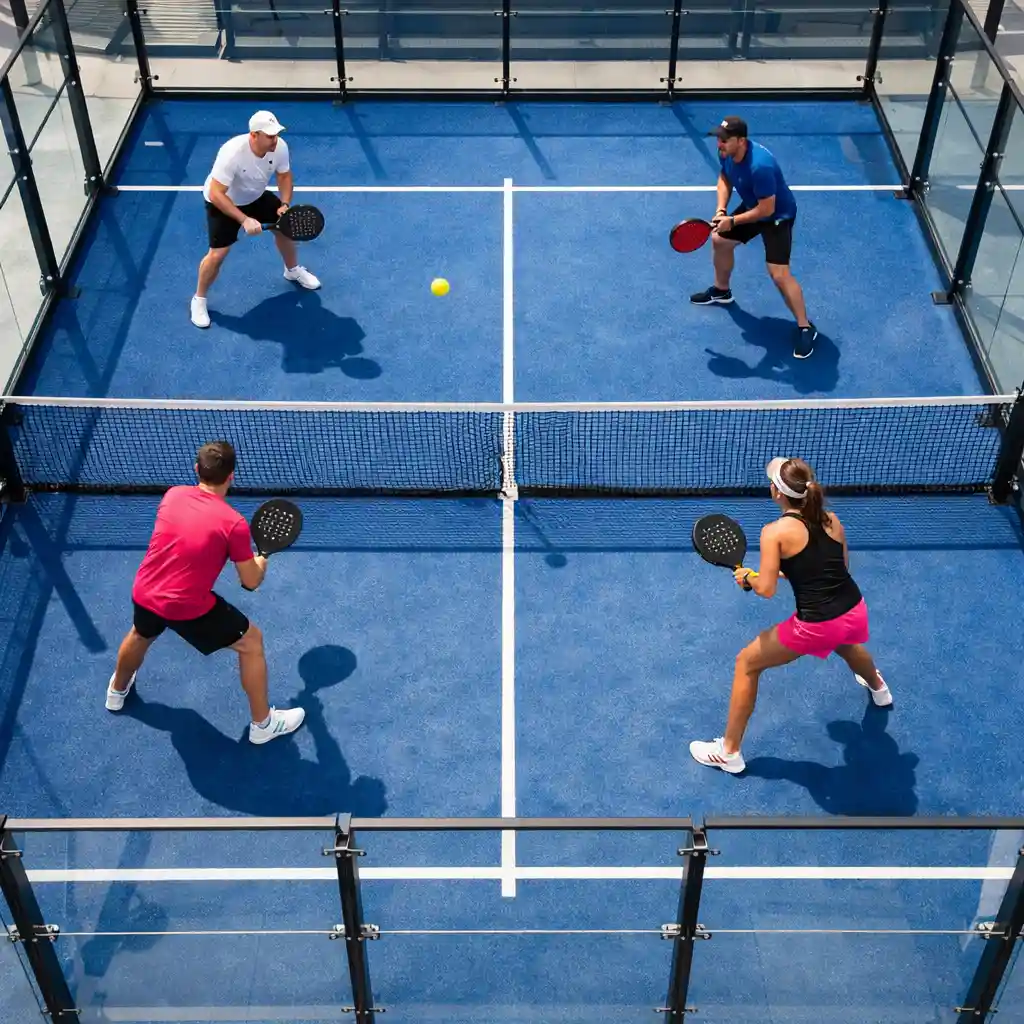
If you play pickleball and you’ve heard people talking about padel, you’re probably wondering whether it’s basically the same sport with a different name. It isn’t. Padel and pickleball look similar from a distance — both use solid rackets, both are played as doubles, both are growing fast in the US — but they feel completely different on court, they require different equipment, and they attract players for different reasons.
This guide is written specifically for US pickleball players who are padel-curious. Not for Europeans who already know padel. Not for complete beginners to racket sports. For you — someone who already plays pickleball and wants to know whether padel is worth the time and money to try.
The short answer: yes, it’s worth trying. The longer answer is everything below.
Padel vs Pickleball — Quick Comparison
| Padel | Pickleball | |
|---|---|---|
| Court size | 20m × 10m (enclosed) | 13.4m × 6.1m (open) |
| Walls | Yes — glass and mesh, in play | No walls |
| Format | Almost always doubles | Singles and doubles |
| Scoring | Tennis scoring (15-30-40, sets) | First to 11, win by 2 |
| Racket | Solid foam face, 355–380g | Solid composite, 200–250g |
| Ball | Pressurized rubber (like tennis) | Perforated plastic (wiffle) |
| Serve | Underhand, after bounce | Underhand, no bounce |
| Net height | 88cm center | 86cm center |
| Cost to start | $100–160 racket | $60–150 paddle |
| US courts | Growing — major metros | Widely available |
The Court — Bigger, Enclosed, With Walls
The most immediately obvious difference between padel and pickleball is the court. A padel court is enclosed on all four sides by a combination of glass walls and metal mesh. Those walls are not out of bounds — they are part of the game. When the ball bounces off a glass wall, it stays in play and your opponent can still hit it.
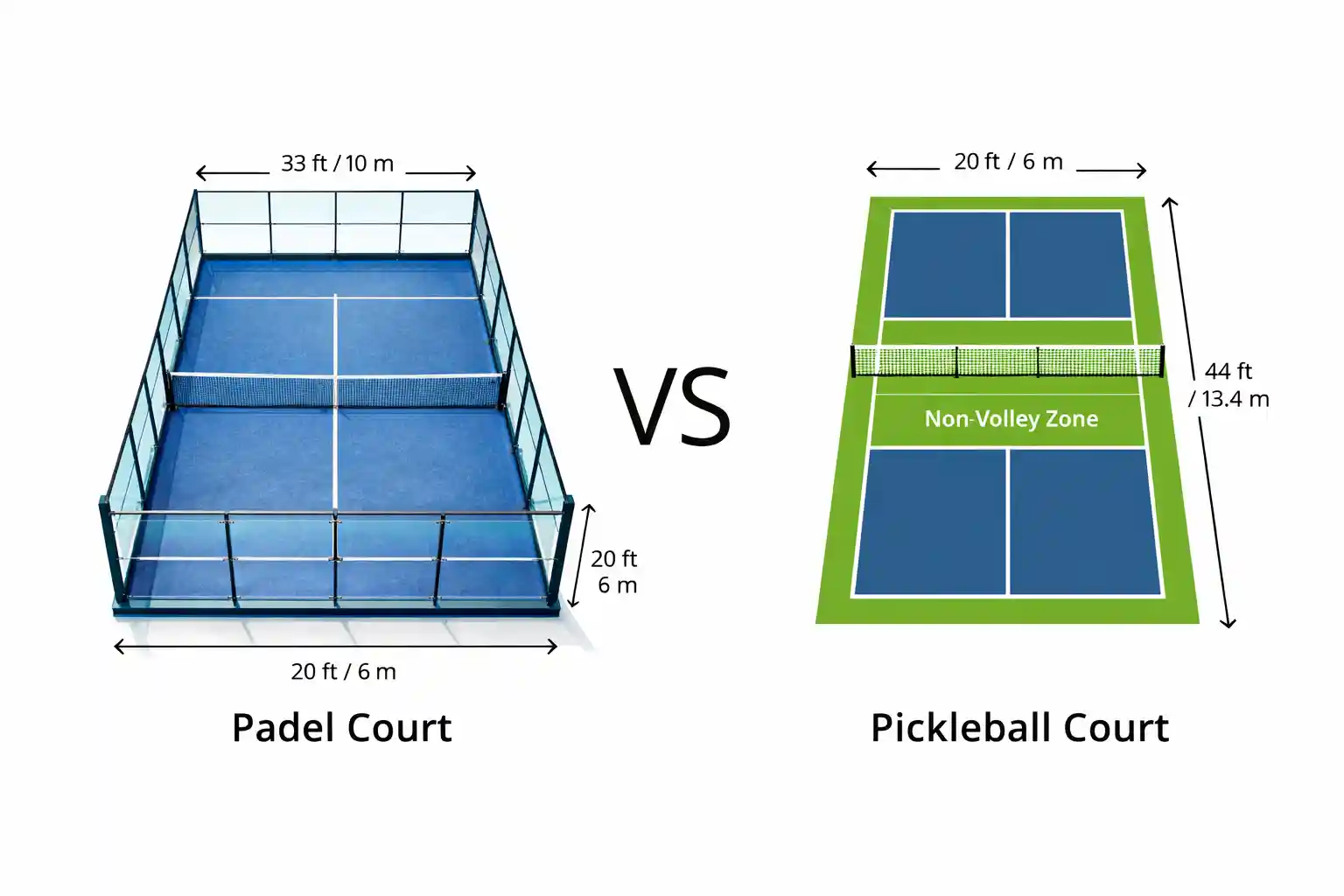
A pickleball court has no walls. It is an open rectangle, slightly smaller than a padel court, where the ball is out the moment it leaves the marked boundaries.
What this means in practice: padel rallies are longer, more dynamic, and tactically more complex. A ball you think you’ve won the point with — a hard drive into the corner — can come off the back glass wall and your opponent can retrieve it and play it back. That wall play is the defining feature of padel and the thing that makes it most different from every other racket sport you’ve played. It’s also what makes padel immediately addictive for pickleball players — it adds a dimension of creativity and chaos that pickleball’s flat court doesn’t have.
Padel courts are also bigger. At 20m × 10m versus pickleball’s 13.4m × 6.1m, you are covering significantly more ground in padel. This makes padel more physically demanding than pickleball — more running, more lateral movement, more footwork required. If you play pickleball for low-impact exercise, be aware that padel will work you harder.
One practical difference for US players: pickleball courts are everywhere. Dedicated padel courts are concentrated in major metro areas — Miami, New York, Austin, Los Angeles, Chicago, Houston. If you live in a smaller city or suburban area, finding a padel court may require a drive. That’s changing fast as padel expands across the US, but it’s a real consideration right now.
The Racket — Heavier, Smaller, No Strings
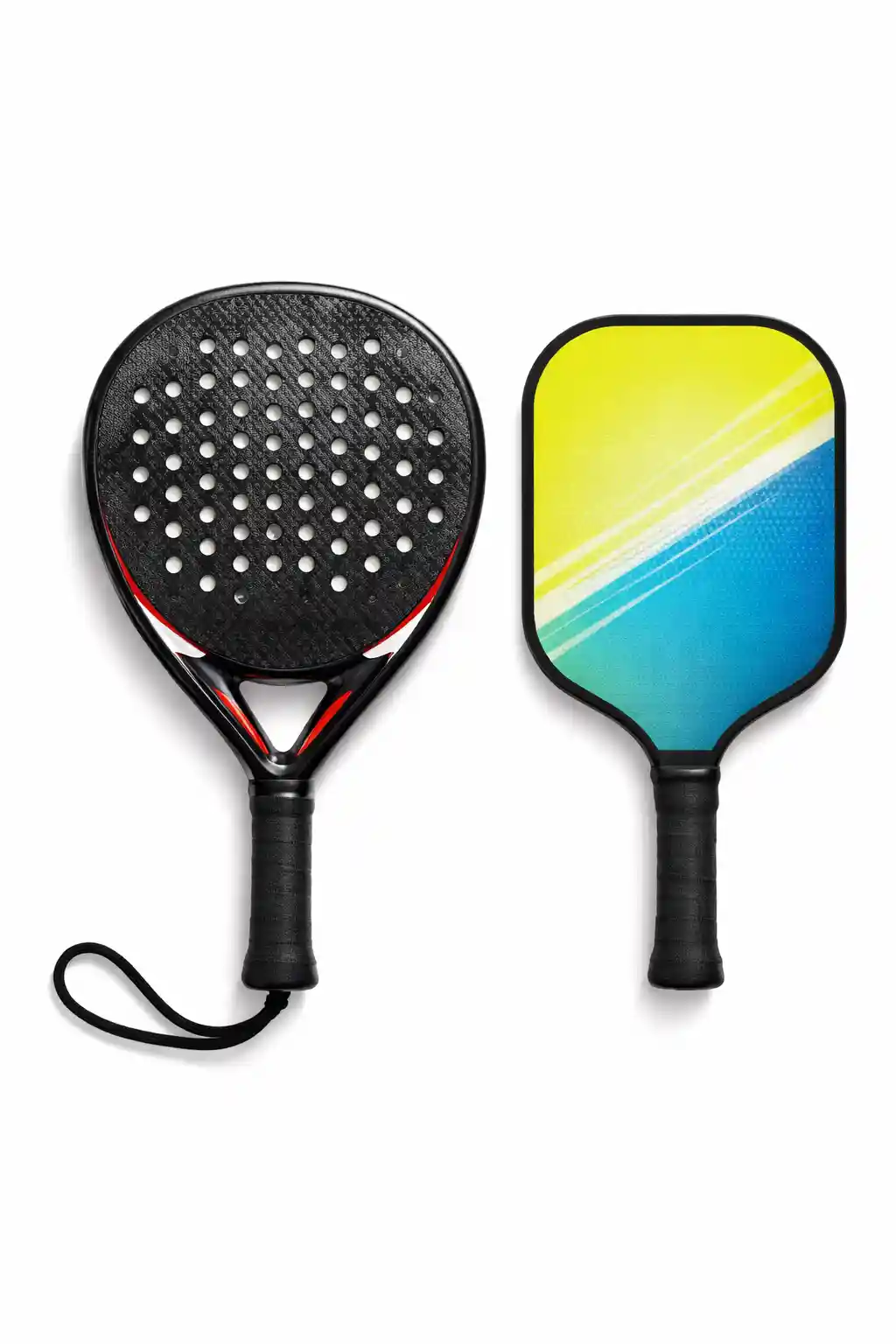
This is where pickleball players get the biggest surprise. A padel racket looks superficially similar to a pickleball paddle — solid face, no strings — but it feels completely different in your hand.
A padel racket weighs 355–380g. Your pickleball paddle weighs 200–250g. That’s roughly 50% heavier. On your first session with a padel racket, your arm will notice it. Your shoulder will notice it. By the end of 90 minutes, if you’re used to pickleball, your arm will be tired in ways it usually isn’t.
This isn’t a reason to avoid padel — it’s just something to know going in. Within a few sessions the weight becomes normal, and most players report that their arm adapts within two to three weeks of regular play.
The other key difference is size. A padel racket is shorter than a tennis racket but larger than a pickleball paddle — 45–47cm long with a wide, perforated foam face. The perforations reduce air resistance and add spin potential. The foam core (EVA rubber) gives the racket its characteristic feel — softer and more cushioned than the composite face of a pickleball paddle, with a slightly different sound on impact.
Padel rackets come in three shapes: round, teardrop, and diamond. As a beginner transitioning from pickleball, you want a round-shaped racket exclusively. Round rackets have a low, central sweet spot — the largest forgiving area — which suits the imprecise hitting of a new padel player. Diamond rackets are for advanced players and will frustrate you if you start with one.
For a pickleball player buying their first padel racket, budget $100–160 and look for a round shape, fiberglass face, and soft EVA core. See our complete guide to the best padel rackets for beginners for specific recommendations with US prices and Amazon links.
The Ball — Pressurized Rubber vs Plastic Wiffle
The ball difference is significant and takes adjustment. A padel ball looks like a tennis ball — felt covered, pressurized rubber — but with slightly lower internal pressure than a standard tennis ball, giving it a lower, more controlled bounce. It travels faster than a pickleball, bounces higher, and has significantly more pace off the racket face.
A pickleball is a hard plastic ball with holes, similar to a wiffle ball. It is lighter, slower, and bounces lower than a padel ball. The characteristic pop sound of pickleball comes from the hard plastic hitting a composite paddle face — completely different from the softer thud of a padel ball on foam.
The practical adjustment: padel balls come at you faster and bounce higher than pickleballs. Your first few sessions will involve a recalibration of timing — you will need to hit earlier and take the ball lower than your pickleball instincts tell you. Most pickleball players adapt to the ball pace within two or three sessions.
The Rules — Similar Structure, Key Differences
If you play pickleball, you already understand the basic structure of padel better than a complete beginner would. Both sports use underhand serves, both are primarily played as doubles, and both involve rallying until someone makes an error or hits a winner. That shared DNA means pickleball players learn padel faster than players coming from no racket sport background.
But the differences are real and important.
Scoring: Padel uses tennis scoring — 15, 30, 40, deuce, advantage, game, set, match. You play sets to six games, win by two, with a tiebreak at 6-6. A match is best of three sets. This is completely different from pickleball’s first-to-11 side-out scoring. Tennis scoring means padel matches take longer and individual points matter less — there’s more opportunity for comebacks.
The serve: In padel, you serve underhand after letting the ball bounce once on the ground. You then hit it below waist height, diagonally into the opponent’s service box. You get two serves, just like tennis. In pickleball, you serve without letting the ball bounce first (or use a drop serve). The padel serve is easier to learn than you might expect — most pickleball players get comfortable with it within a session.
The kitchen equivalent: Pickleball has the non-volley zone — the kitchen — where you cannot volley. Padel has no equivalent restriction near the net. You can volley anywhere on the court at any time. This means net play in padel is more aggressive and less technical than pickleball’s dinking game.
Wall play: There is no equivalent in pickleball. When the ball bounces in your court and then hits the back glass wall, it remains in play — you can let it come off the wall and play it. You can also deliberately drive balls into the walls to create angles your opponent can’t reach. Learning to use the walls is the single biggest skill development challenge for pickleball players switching to padel, and it’s also what makes the sport so strategically deep.
The two-bounce rule: Pickleball requires the ball to bounce once on each side before volleys are allowed. Padel has no such rule — you can volley from the very first shot of a rally. This makes padel rallies faster at the net and rewards aggressive forward positioning.
Difficulty — Which Sport Is Harder to Learn?
Pickleball is easier to learn. This is not a criticism of pickleball — it’s a design feature. Pickleball was invented to be accessible to all ages and fitness levels, and it succeeds completely at that goal. Most new players can have fun rallies within their first hour.
Padel has a steeper learning curve for three specific reasons. First, the heavier racket requires physical adjustment. Second, wall play adds a tactical dimension that takes weeks to understand and months to master. Third, the larger court demands better footwork and fitness.
However — and this matters for pickleball players specifically — the learning curve is significantly shorter if you already play pickleball. You already understand doubles positioning, net play, dinking (padel has an equivalent shot called La Chiquita), soft hands at the net, and the general shape of a racket sport rally. You are not starting from zero. You are starting from a significant advantage.
Most pickleball players report feeling genuinely competent at padel within four to six sessions — not expert, but capable of playing real points and having fun. That’s faster than most other sports transitions.
Cost — What Does It Cost to Start Padel in the US?
Equipment: A beginner padel racket costs $100–160 on Amazon US. You’ll also need padel shoes — regular sneakers or running shoes don’t provide the lateral support and grip pattern that padel’s artificial grass court surface requires. Budget $80–130 for a decent pair of padel shoes. See our guide to the best padel shoes for specific recommendations. Total equipment cost to start: $180–290.
Compare that to pickleball, where a good beginner paddle costs $60–150 and you can play in any court shoes. Padel has a higher equipment cost, primarily because of the shoes requirement.
Court fees: Padel is almost always played at dedicated clubs that charge court rental fees. In major US metros, expect to pay $25–50 per person per hour for a padel court. Some clubs offer memberships that reduce that cost significantly. Pickleball courts at public parks are often free or very low cost. This is a genuine difference in ongoing cost — padel is more expensive to play regularly than pickleball.
The bottom line: If you’re trying padel for the first time, the equipment investment is $180–290. That’s not trivial. But compared to golf, tennis, or skiing, it’s a reasonable entry cost for a sport you may play for decades.
Which Sport Should You Play?
You don’t have to choose. Many US players play both — pickleball for accessible, low-cost local sessions and padel when they want a more intense, social, club-based experience. They’re not competing sports. They scratch different itches.
Play padel if:
- You want a faster, more physically demanding game
- You enjoy the tactical complexity of wall play
- You’re in a major US metro with padel court access
- You want to connect with a globally growing sport with a professional tour
- You’re a competitive player looking for more depth and challenge
Stick with pickleball if:
- You want the most accessible, lowest-cost racket sport available
- You play in a smaller US city where padel courts don’t exist yet
- You prefer a lower-impact game
- You love the pickleball community and culture
Try padel if you already play pickleball. That’s the honest recommendation for any US pickleball player reading this. You have enough transferable skill to pick it up quickly. The wall play will challenge you and delight you. And you might find yourself spending more time on the padel court than the pickleball court within a year.
Frequently Asked Questions
Is padel the same as pickleball? No. Padel and pickleball are two completely different sports. They share some surface similarities — both use solid rackets without strings and are primarily played as doubles — but the courts, balls, rules, and playing experience are entirely different. Padel is played on an enclosed glass court with walls in play, uses a pressurized rubber ball similar to a tennis ball, and follows tennis scoring. Pickleball is played on an open court, uses a perforated plastic ball, and scores to 11.
Can I use my pickleball paddle to play padel? No. A pickleball paddle is too light and small for padel. The padel ball is heavier and faster than a pickleball, and a pickleball paddle won’t generate the response you need. You need a dedicated padel racket. See our beginner racket guide for the best options available in the US right now.
Is padel harder than pickleball? Yes, generally. Padel has a steeper learning curve — heavier racket, larger court, faster ball, and wall play to master. However, pickleball players learn padel significantly faster than complete beginners because of transferable skills in doubles positioning, net play, and soft-touch shots.
How much does it cost to start playing padel? Budget $100–160 for a beginner racket and $80–130 for padel shoes. Total starting cost of $180–290. Court fees at padel clubs in US metros typically run $25–50 per person per hour.
Where can I play padel in the US? Padel courts are concentrated in major metros — Miami, New York, Austin, Los Angeles, Chicago, and Houston have the highest concentration of dedicated padel facilities. The number of US padel courts is growing rapidly. Check our US courts directory for locations near you.
Which is better for fitness — padel or pickleball? Padel is more physically demanding. The larger court requires more running and lateral movement, and matches typically last longer than pickleball games. A 90-minute padel session will burn more calories and work your cardiovascular system harder than an equivalent pickleball session. If low-impact exercise is your priority, pickleball is the better choice. If you want a more intense workout, padel delivers it.
Do padel and pickleball use the same balls? No. Padel uses a pressurized rubber ball similar to a tennis ball but with slightly lower internal pressure and a lower bounce. Pickleball uses a hard plastic perforated ball similar to a wiffle ball. They are not interchangeable.
Ready to Try Padel?
If this comparison has convinced you to give padel a shot, the next step is getting the right racket. Start with our complete guide to the best padel rackets for beginners — five specific rackets available on Amazon US with real prices, honest verdicts, and clear recommendations based on whether you’re coming from pickleball or tennis.
Shop Beginner Padel Rackets on Amazon →You can also browse our full padel equipment guide for everything you need before your first session.
Ready to Start Playing Padel?
Browse our full equipment guides to find the right racket and shoes before your first session.