Affiliate Disclosure: PadelGuideUS participates in the Amazon Associates program and other affiliate programs. We may earn a commission when you purchase through our links, at no extra cost to you. Our recommendations are always editorially independent. Learn more.
Every Racket Sport Comparison You Need — In One Place
If you’ve been trying to figure out how padel vs tennis stacks up, or whether paddle tennis vs pickleball is even a meaningful comparison, you’re not alone. The US racket sports scene in 2026 is genuinely crowded — padel, pickleball, tennis, paddle tennis, and platform tennis all exist simultaneously, all have dedicated players, and all have confusingly similar names.
This guide cuts through all of it. We cover every meaningful comparison — padel vs tennis, padel vs pickleball, padel vs paddle tennis, and padel vs platform tennis — in one place, written specifically for US players trying to figure out which sport deserves their time and money next.
The Sports at a Glance
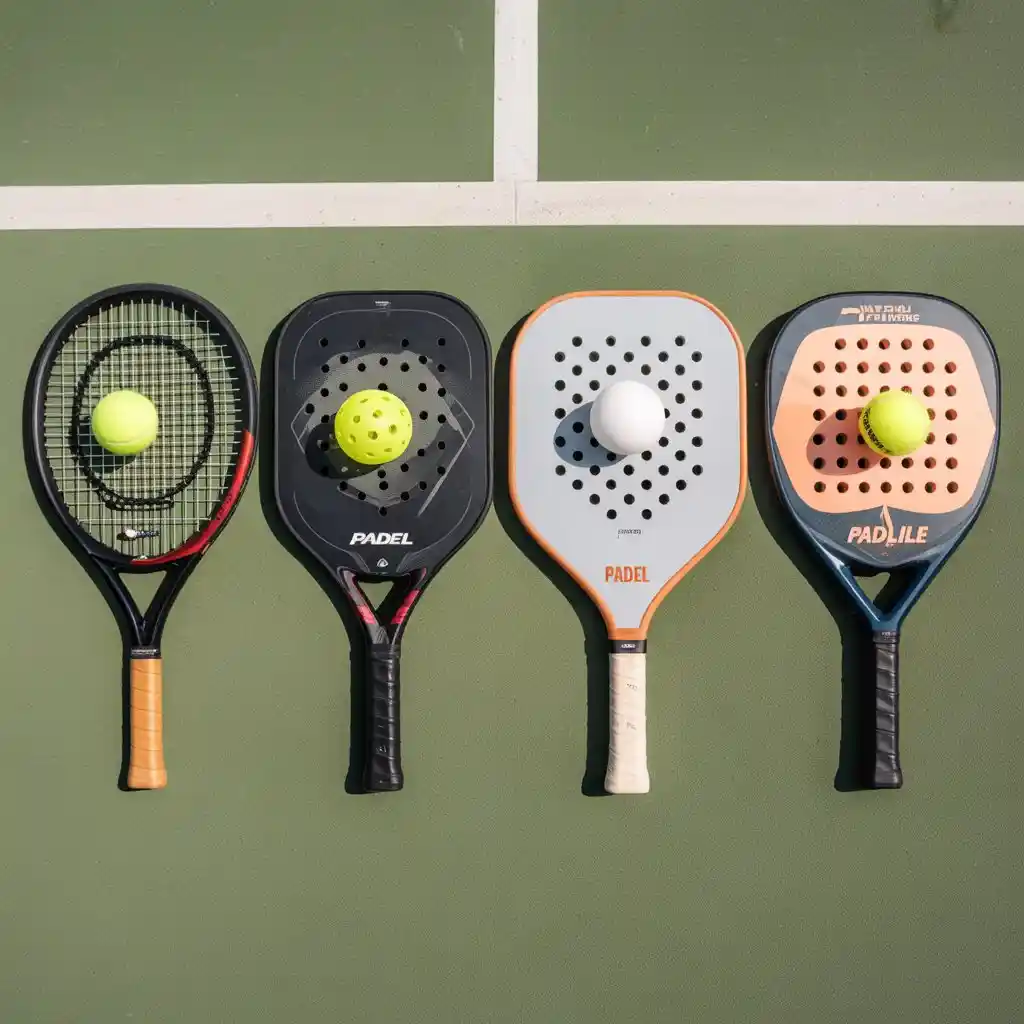
Before diving into comparisons, here’s a quick orientation on each sport:
Tennis — the baseline. Played on a 78-foot court with strung rackets and felt balls. Singles or doubles. The most established racket sport in the world with the deepest infrastructure in the US.
Pickleball — America’s fastest-growing sport by participation. Played on a badminton-sized court with solid paddles and a wiffle ball. Extremely accessible, social, and easy to learn. 13 million US players as of 2026.
Padel — the fastest-growing racket sport globally. Played in an enclosed glass and mesh court, always doubles, with solid stringless rackets and pressurized felt balls. Tennis scoring. Walls are in play. Now in every major US metro.
Paddle Tennis — an older US sport played on a smaller open court with depressurized tennis balls and solid paddles. Popular in beach communities, particularly in Southern California. Not the same as padel.
Platform Tennis — a cold-weather variant of paddle tennis played on a raised heated aluminum court with screens around the edges. Popular in the Northeast and Midwest. Also not the same as padel.
Padel vs Tennis — What Actually Changes
Padel grew directly out of tennis — the scoring is identical, the serve is underhand in padel vs overhead in tennis, and many of the tactical concepts carry over. But the playing experience is dramatically different.
| Padel | Tennis | |
|---|---|---|
| Court size | 65 x 32 ft enclosed | 78 x 36 ft open |
| Walls | In play | Not in play |
| Players | Doubles only | Singles or doubles |
| Racket | Solid, no strings | Strung racket |
| Serve | Underhand, below waist | Overhead |
| Scoring | Identical to tennis | Standard |
| Learning curve | Easier to start | Steeper |
| Physical demand | High lateral, less endurance | High endurance |
The biggest difference is the walls. In padel, a ball that hits the back glass is still in play — you chase it down, play it off the glass, and keep the rally alive. This changes everything about court positioning and strategy. Points last longer, rallies are more dynamic, and the enclosed court creates a completely different atmosphere than an open tennis court.
The serve is easier. Padel’s underhand serve is significantly less technically demanding than a tennis serve, which is one of the reasons padel has a much gentler learning curve. Most tennis players can play a real competitive padel match within a few sessions. Most beginners can too.
The racket transition. Tennis players coming to padel need to adjust to a solid racket with no strings. The feel is completely different — padel is more about control and placement than power, and the solid face rewards flat, precise shots rather than topspin. Most tennis players find this adjustment takes two to four weeks of regular play.
Who padel is right for: Tennis players who want something more social, more accessible for doubles, and less physically punishing on the body. Padel is dramatically lower impact on shoulders and elbows than tennis — no serve mechanics, no topspin loading.
Padel vs Pickleball — The Comparison Everyone Is Making
Pickleball and padel are the two fastest-growing racket sports in the US right now and players frequently discover one after the other. They share more DNA than most people realize.
| Padel | Pickleball | |
|---|---|---|
| Court | Enclosed glass and mesh | Open court |
| Walls | In play | Not in play |
| Players | Doubles only | Singles or doubles |
| Ball | Pressurized felt ball | Perforated wiffle ball |
| Racket | Solid, heavier (~360g) | Solid, lighter (~240g) |
| Serve | Underhand bounce serve | Underhand volley serve |
| Scoring | Tennis scoring | Side-out to 11 |
| Net height | 35” center | 34” center |
| Court cost | Higher — enclosed structure | Lower — paint on any surface |
What transfers from pickleball to padel: Almost everything that makes you good at pickleball makes you good at padel. Lateral quickness, soft hands at the net, doubles communication, and the instinct to play angles rather than power — all of it applies directly. Pickleball players are consistently the fastest learners in beginner padel sessions.
What’s different: The glass walls are the biggest mental adjustment. In pickleball you never play a ball off a wall — in padel you do it constantly, and learning when to let the ball come off the back glass versus intercepting it early is the core skill that separates beginners from intermediate padel players. The heavier racket and pressurized ball also produce a noticeably more powerful game than pickleball — padel rallies can get genuinely fast at the intermediate level.
Which one should you play: If courts are available near you, try both. They complement each other well — padel makes you a more tactically disciplined pickleball player, and pickleball makes your net game sharper in padel. If you can only choose one and you’re starting from scratch, pickleball has ten times more courts and is easier to find a game.
For a deeper breakdown of this specific comparison, read our padel vs pickleball full guide.
Padel vs Paddle Tennis — Two Different Sports
This is the comparison that causes the most confusion, largely because the names are so similar. Padel and paddle tennis are not the same sport and are not related — they developed independently on different continents.
| Padel | Paddle Tennis | |
|---|---|---|
| Origin | Mexico, 1969 | USA, 1915 |
| Court | Enclosed glass and mesh | Open, smaller than tennis |
| Walls | In play | Not in play |
| Ball | Pressurized felt ball | Depressurized tennis ball |
| Racket | Solid foam core, no strings | Solid with perforations |
| Players | Doubles only | Singles or doubles |
| US popularity | Fast growing nationally | Regional — beach communities |
| Net height | 35” center | 31” center |
Paddle tennis was invented in New York in 1915 and has been played on US beaches — particularly in Southern California’s Venice Beach — for over a century. It’s played on a smaller open court with a depressurized tennis ball and a solid perforated paddle. It has a passionate community but has never expanded significantly beyond its regional strongholds.
Padel arrived in the US much later but has grown at a pace paddle tennis never achieved, largely because the enclosed glass court creates a more dramatic, spectator-friendly experience and because the sport’s explosion in Europe and Latin America brought significant investment and infrastructure to the US market.
If you’ve been watching beach paddle tennis in California and wondering if it’s padel — it’s not. They look similar from a distance but play completely differently.
Padel vs Platform Tennis — The Cold Weather Cousin
Platform tennis is the most niche sport in this comparison and the one fewest US players have encountered outside the Northeast and Midwest. It deserves its own section because it’s frequently confused with both padel and paddle tennis.
| Padel | Platform Tennis | |
|---|---|---|
| Court | Enclosed glass and mesh | Raised aluminum, heated |
| Walls/Screens | Glass walls, in play | Wire screens, in play |
| Climate | Year-round | Designed for winter |
| Ball | Pressurized felt ball | Sponge rubber ball |
| Racket | Solid foam core | Solid with holes |
| Players | Doubles only | Doubles only |
| US base | National, growing fast | Northeast / Midwest clubs |
The key similarity: Both padel and platform tennis use the walls — or in platform tennis’s case, the wire screens — as part of play. If you’ve played platform tennis, the concept of playing a ball off the back screen will feel familiar in padel. The tactical instinct transfers even if the equipment and court surface are completely different.
The key difference: Platform tennis was purpose-built for cold weather. The raised aluminum deck is heated from below to keep it snow and ice free, and the sport has traditionally been a winter country club activity in states like Connecticut, New Jersey, and Illinois. Padel is played year-round and has a much younger, more diverse demographic.
Which Sport Should You Try Next?
If you play tennis: Try padel. The scoring is identical, the tactical concepts transfer, and the learning curve is dramatically lower than starting pickleball from scratch. Your tennis fitness will carry over immediately.
If you play pickleball: Try padel. Your lateral quickness and net instincts will make you a natural. The glass walls and heavier racket are the main adjustments — both click within a few sessions.
If you play paddle tennis: Try padel. The wall concept is already in your game. The enclosed court and different ball will feel foreign at first but the tactical DNA is similar.
If you play platform tennis: Try padel in the warmer months. The wall play transfers more directly to padel than almost any other sport.
If you’re starting from scratch: Start with pickleball for accessibility, then add padel once you’re hooked on court sports. You’ll have more fun in your first padel session having played pickleball than coming in completely cold.
FAQ
What is the difference between padel and tennis? Padel is enclosed glass court, underhand serve, doubles only, walls in play, identical scoring to tennis. Much easier learning curve, lower physical demand on shoulders and elbows.
What is the difference between padel and pickleball? Padel — enclosed court, walls in play, heavier racket, felt ball, tennis scoring. Pickleball — open court, no walls, lighter paddle, wiffle ball, side-out scoring to 11. Pickleball players pick up padel faster than almost anyone.
Is paddle tennis the same as padel? No. Completely different sports. Paddle tennis is American, invented 1915, open court, depressurized tennis ball. Padel originated in Mexico 1969, enclosed glass court, walls in play, pressurized felt ball.
Is padel easier than tennis? Yes. The underhand serve is far less demanding than a tennis serve, the smaller court reduces endurance requirements, and the walls keep rallies alive longer. Most people play a real competitive match within two or three sessions.
What is platform tennis and how does it differ from padel? Platform tennis is a winter sport on a raised heated aluminum court with wire screens in play. Similar wall concept to padel but uses a sponge rubber ball and is primarily a Northeast and Midwest country club sport. Padel is year-round, nationally growing, glass and mesh court.
Which racket sport is easiest to learn? Pickleball first, padel second, tennis third. Pickleball gets you playing real points in an hour. Padel gets you into competitive matches within a few sessions. Tennis has the steepest learning curve by far.
Ready to Try Padel?
If any of these comparisons have you curious about padel, the best next step is finding a court near you and booking an intro session — most US padel clubs offer them. For equipment, you don’t need much to start. Our padel equipment for beginners guide covers exactly what to buy and what to skip. If you want to go straight to rackets, our best padel rackets for beginners guide has the five best options on Amazon US right now.
Head Extreme EVO 2026
The best beginner padel racket on Amazon US — round shape for maximum forgiveness, Power Foam core for control, and carbon frame for durability. The right racket for any tennis, pickleball, or paddle tennis player picking up padel for the first time.
Ready to Start Playing Padel?
Browse our full equipment guides to find the right racket and shoes before your first session.